
Capacity
Define the load and operating profile.
Demand, load profile, voltage, growth, and site conditions shape the requirement.
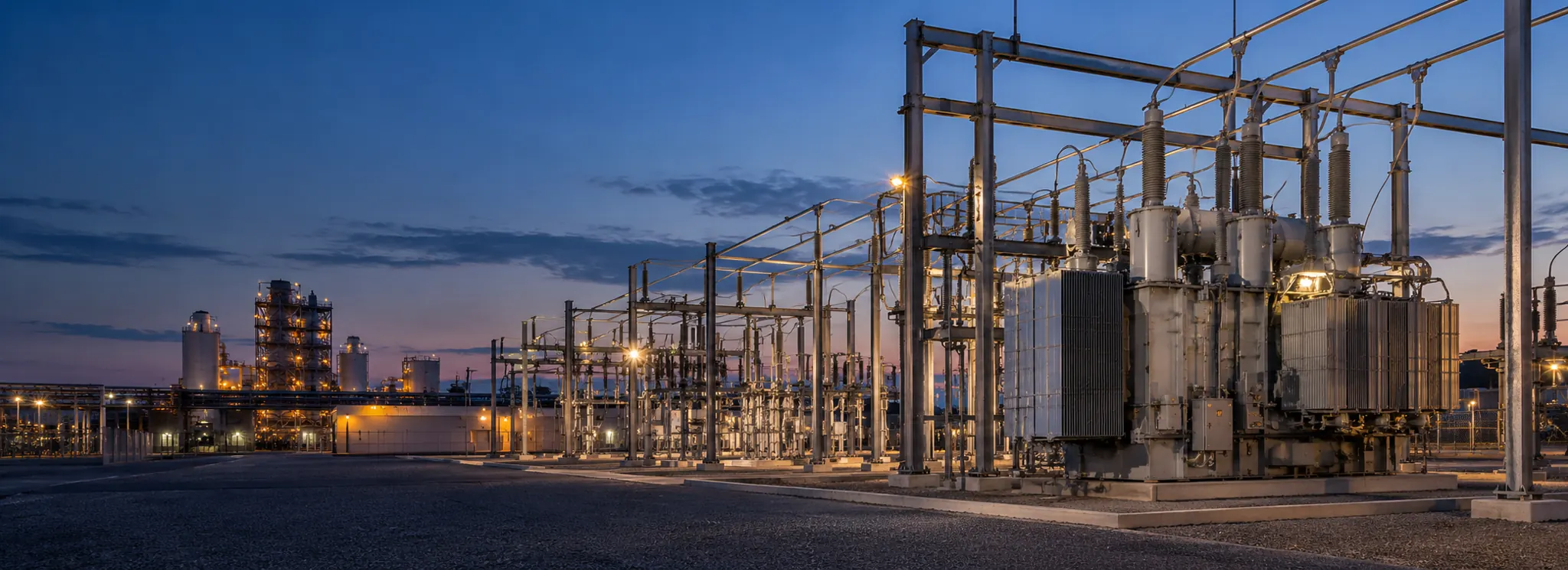
Power Infrastructure
Capacity. Reliability. Equipment. Timing. The challenge may be one critical requirement—or the complete power pathway.
Convex starts with what the project needs, explores practical options, and helps connect the infrastructure and independent capabilities that can move it forward.
Start With the Requirement
01 / DEFINE THE NEEDThe right power pathway starts with the requirement—not a predetermined technology. A clearer brief makes it easier to compare options, identify constraints, and bring the right specialists into the conversation.
Define the load and operating profile.
Demand, load profile, voltage, growth, and site conditions shape the requirement.
Identify critical loads and continuity needs.
Critical loads, redundancy, resilience, and operating expectations inform the configuration.
Set the required energization date.
Compare project milestones with utility, interconnection, and equipment delivery timelines.
Match the commercial structure to project conditions.
Ownership, capital, operating cost, fuel or energy supply, and commercial structure matter.
Power Pathways
02 / EXPLORE THE CONFIGURATIONThe project requirement helps determine which pathway—or combination—may fit. Convex helps frame the options and connect the people who can assess and deliver them.
Connect to available utility capacity.
Capacity, service upgrades, interconnection, reliability, and energization timing need to align with the project.
Generate power at or near the facility.
Onsite generation may serve a primary, supplementary, resilience, or bridge role. Fuel, emissions, permitting, operations, and utility requirements need evaluation.
Manage when power is used—and how it responds.
BESS can support peak management, resilience, and coordinated power delivery. Duration, charging source, controls, and the load profile determine what it can do.
Coordinate more than one source or resource.
Grid, generation, and storage may work together through a defined electrical and controls strategy. Integration is part of the pathway.
Commercial layer
A PPA or EaaS structure may shape how power, equipment, and operating responsibilities are contracted and funded. It sits alongside the physical configuration; it does not replace the technical requirement.
Electrical Infrastructure
03 / MAKE THE SYSTEM WORKA source of power still needs an electrical system that can transform, protect, control, and distribute it. Equipment, engineering, protection, controls, and installation need to fit together.
Match power to the required voltage.
Transformers · Substations
Isolate faults and protect the system.
Switchgear · Protection
Coordinate sources, storage, and loads.
Controls · Generation · BESS
Deliver power to the operating facility.
Distribution · Packaged Electrical Systems
The scope may include transformers, switchgear, substations, power generation equipment, BESS, or packaged electrical systems. The design and project conditions define what is needed.
The Schedule Problem
04 / WHEN TIMELINES DIVERGEUtility timelines, interconnection delays, and long-lead electrical equipment can put the project need date ahead of the permanent power solution. That gap deserves its own plan.
Project need date
Construction, commissioning, operations, expansion, or a replacement requirement.
Utility / equipment delivery date
Utility service, interconnection, or electrical infrastructure may arrive later.
Investigate bridge power, phased energization, temporary or onsite generation, alternative configurations, and accelerated equipment sourcing where the project conditions allow.
Convex helps clarify the constraint and bring relevant capabilities into the discussion. Feasibility, safety, approvals, technical compatibility, and verified availability shape the next step.
DEFINED REQUIREMENTS
05 / FROM REQUIREMENT TO DELIVERYBring the defined requirement. The next conversation may focus on critical power equipment sourcing, procurement, engineering coordination, and execution capability.
CONNECT THE MISSING PIECES
06 / CONNECT THE MISSING PIECESAn equipment requirement may sit inside a larger project problem. Convex helps identify the missing pieces and bring appropriate capabilities into the conversation.
Convex’s role is to understand and connect. Engineering, construction, financing, utility services, and other specialist work remain with the qualified organizations responsible for them.
Project Context
07 / THE REQUIREMENT COMES FIRSTIf the project has a meaningful power or electrical-infrastructure challenge, start with the requirement. The operating context helps clarify it.
The Convex Approach
08 / FROM COMPLEXITY TO CLARITYUnderstand → Explore → Connect → Move Forward.
The same Convex approach, applied to the physical and commercial realities of powering a project.
Define the load, site, reliability, timing, and commercial constraints.
Compare practical configurations and the conditions each would require.
Bring relevant equipment, technical expertise, and project partners into the conversation.
Clarify responsibilities and the practical next step toward delivery.
Start With the Project Need
Still determining the pathway? Already have the design or equipment requirement? Bring the project, the constraint, the schedule—or simply the question.