
Land
A property owner or community wants to understand whether land could support an energy or infrastructure opportunity.
Explore the land’s practical potential.
Energy Development
An energy opportunity may begin with land, a community need, an infrastructure challenge, an interested developer, a power requirement—or simply a question about what might be possible.
Convex helps examine the opportunity early, understand the context, and identify practical next steps before major commitments are made.
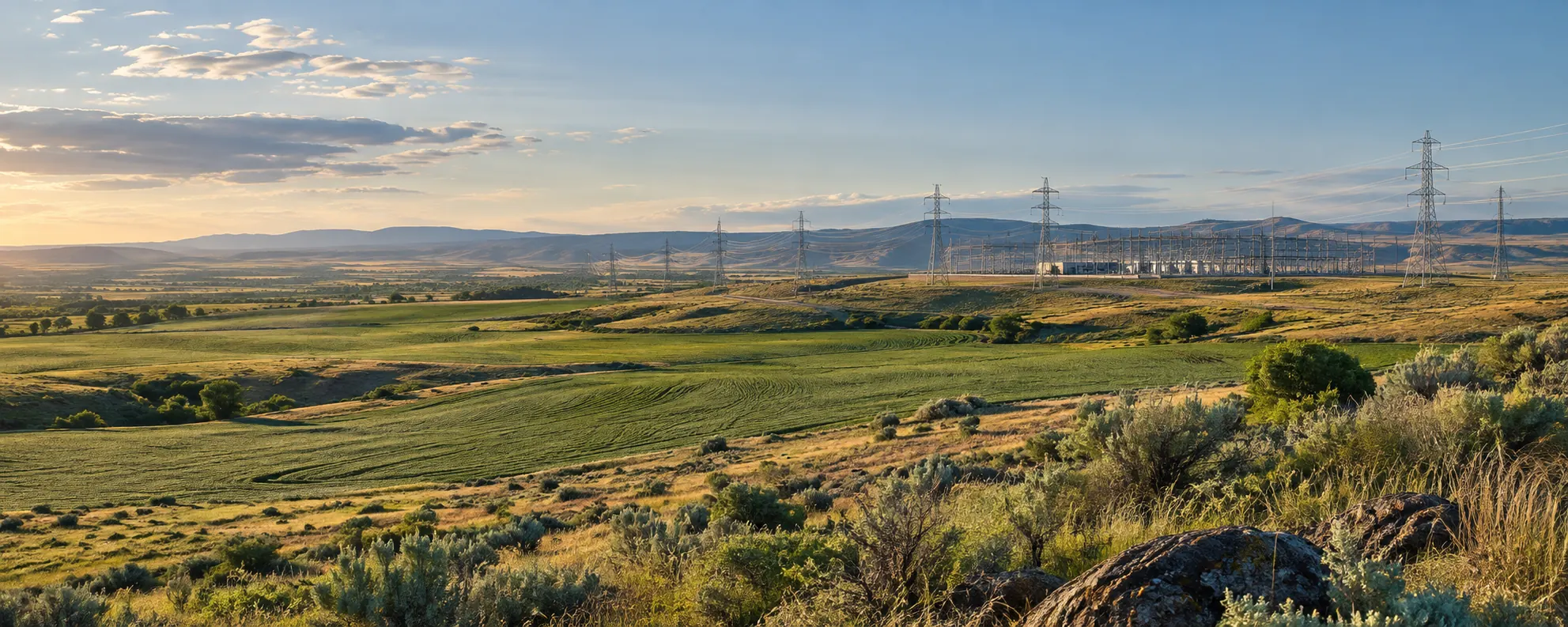
A place. A need. An open question.
Land, infrastructure, and local priorities shape the opportunity.
NEED · PLACE · OPPORTUNITY · PEOPLE
From complexity to clarity.
Community & Local Energy
01 / THE NEED COMES FIRST
Energy development does not always need to begin with someone proposing a technology.
A community may be thinking about the reliability of essential services, the cost of energy, local generation, or what existing land and infrastructure could support.
Solar, storage, microgrids, generation, and other distributed energy options are possibilities to examine after the need is understood—not assumptions to start from.
The need should help determine the project—not the other way around.
Start With the Opportunity
02 / DIFFERENT WAYS IN
You do not need to arrive with a project plan. A useful first conversation can start with any of these.
A property owner or community wants to understand whether land could support an energy or infrastructure opportunity.
Explore the land’s practical potential.
A business, facility, or community has a reliability, capacity, cost, resilience, or infrastructure problem.
Clarify the energy or infrastructure need.
Someone has identified a possible energy project but needs to understand whether the fundamentals support it.
Examine the conditions behind the project idea.
A developer or outside party has approached a landowner or community with an opportunity that needs to be understood before commitments are made.
What is actually being proposed?
Site & Opportunity Potential
03 / READ THE PLACE
A promising idea has to be understood in its actual setting. Early questions about the site and project bring land, infrastructure, people, and commercial realities into view.
Land and physical conditions · access and location · surrounding land uses
Power and electrical infrastructure · transmission/interconnection context · resource or energy conditions
Stakeholder context · environmental and permitting constraints
Project scale · schedule · commercial realities
CONSIDERED TOGETHER
POTENTIAL PROJECT FIT
A clearer question—not a viability guarantee.
This is early-stage clarity, not a rigid score or a substitute for formal engineering, environmental, legal, permitting, interconnection, or financial diligence by qualified independent specialists.
Landowners & Communities
04 / BEFORE COMMITMENTS
For landowners, Tribal communities, municipalities, local organizations, and other stakeholders, an outside proposal can create as many questions as answers.
Convex helps bring the opportunity and the unanswered questions into focus. The aim is to understand the proposal before deciding what deserves further attention.
Early-stage community and Tribal energy questions should begin with the priorities and decision-making context of the people involved. No representation, mandate, or development rights are assumed.
A clearer path forward doesn't always mean moving forward right away.
Sometimes the value is knowing what deserves another look, what questions remain, and what can wait.
From Possibility to a Development Path
05 / FROM COMPLEXITY TO CLARITY
An opportunity does not have to move toward construction. The objective is to understand what would have to be true for it to move forward responsibly.
Name the need or opportunity.
Name the need, place, or proposal.
Understand the surrounding context.
Understand the people, infrastructure, land, and priorities.
Explore possibilities supported by the conditions.
Identify constraints and unresolved questions.
Identify unanswered questions, dependencies, and specialist work.
Clarify what progress would require.
Outline the information, capabilities, and responsibilities required.
Choose a responsible next step.
Investigate further, ask more questions, take more time, change direction, or decide not to proceed.
A RESPONSIBLE NEXT STEP
Investigate further · Take more time · Decide not to proceed
When Development Meets Infrastructure
06 / TWO CONNECTED PATHWAYS
An otherwise promising opportunity may eventually depend on how power reaches the project—and whether the infrastructure, timing, and commercial structure can support it.
Utility capacity, interconnection, generation, storage, transformers and substations, equipment availability, and project schedule may become defining questions. Financing or commercial power structures may also shape the path.
Explore Power InfrastructureENERGY DEVELOPMENT
What could make sense here?
THE SAME PROJECT NEED
POWER INFRASTRUCTURE
How do we power the project?
Bringing the Right Expertise In
07 / CONNECT APPROPRIATE CAPABILITIES
Early-stage opportunities can reveal questions that need qualified independent expertise. Convex’s role is to understand what the opportunity needs and help bring appropriate capabilities into the conversation where useful.
Specialist work, advice, approvals, and delivery responsibilities remain with the independent organizations qualified to provide them.
The problem
determines the path.
The Convex Approach
08 / MAKE THE NEXT STEP CLEARER
Help starts with understanding.
The same Convex model, applied to place, opportunity, community, and early-stage energy planning.
Understand the need, place, and people involved.
Explore practical possibilities in context.
Identify the independent expertise or capabilities the opportunity requires.
Turn clarity into a responsible next step.
Begin Here
09 / START THE CONVERSATION
You do not need to arrive with a fully developed project.
Bring the site, the opportunity, the community need, the development question—or simply what you’re trying to accomplish.
We’ll start there.